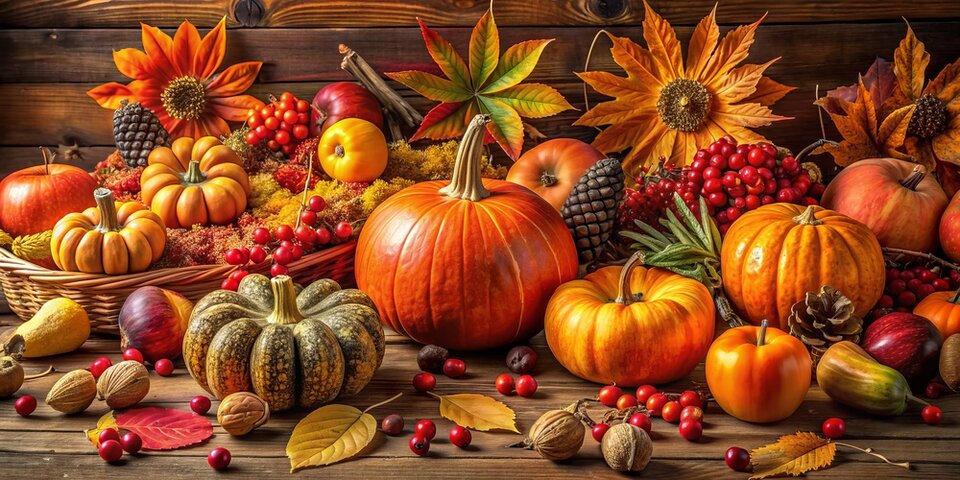
Long ago, in a small rural village nestled amidst the rolling hills and dense forests of Europe, a tradition was born that would forever link pumpkins to Halloween. This village relied heavily on agriculture and celebrated the end of the harvest season with a festival to honor the spirits of their ancestors and ensure prosperity for the year to come.
As the days grew shorter and the nights colder, the villagers prepared for Samhain, the ancient festival marking the transition from the season of light to the season of darkness. They believed this was a time when the veil between the living and the spirit world was especially thin, allowing souls of the departed to visit the realm of the living.
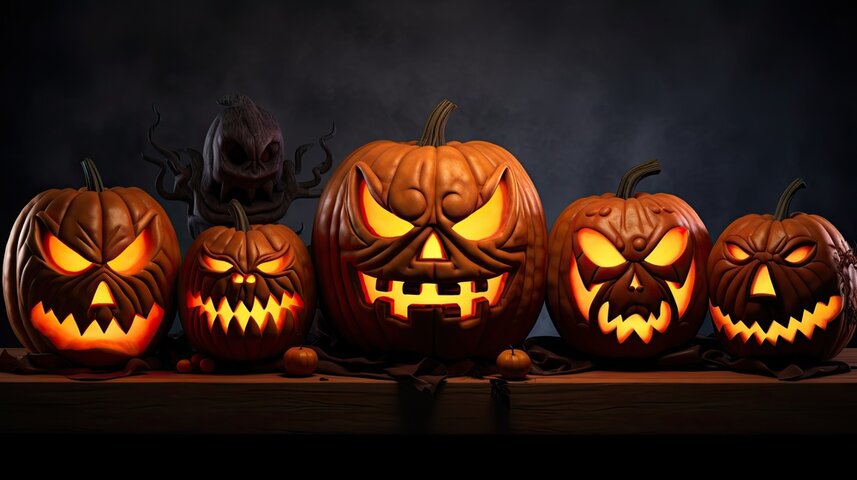
In anticipation of wandering spirits, it became customary to carve grotesque faces into turnips and gourds, a tradition believed to ward off harmful spirits. Candles were placed inside these carved vegetables, casting an eerie glow in the night, creating a beacon of protection and a reminder of the balance between life and death.
However, this small village soon faced an unprecedented problem. One particularly harsh autumn, the turnip harvest failed, leaving the villagers in disarray about how to continue their protective custom. As festival time neared, a resourceful farmer stumbled upon an unusual crop abundant along the edges of his field—large, orange pumpkins.

Without hesitation, he proposed using these pumpkins in place of the scarce turnips. Initially met with skepticism, his idea was given a hesitant trial. To their surprise, they discovered that pumpkins were perfect for carving due to their size and softer flesh. The rich color of the pumpkins and the soft glow from the candlelight within brought a new level of mystique to their traditional celebration.
Word of the innovation spread, and soon neighboring villages adopted the practice. Over generations, as villagers immigrated to America, they brought their autumnal traditions along, adapting them to the land’s fertile abundance. Here, the pumpkin already flourished as a native plant, becoming an emblem of the seasonal harvest.
As traditions evolved and the festival eventually transformed into what is now Halloween, the carved pumpkins, dubbed “jack-o’-lanterns,” endured as a symbol to ward off evil spirits. The sight of glowing jack-o’-lanterns on doorsteps became synonymous with Halloween night.
Thus, from a time of necessity and adaptation, the pumpkin became forever enshrined as an enduring symbol of Halloween—a reminder of the resilience of traditions and the ancient connection between the living and the spirit world.
Article generated through AI
 Martha Washington Garden Club